
A home move planned around real life
A successful residential move connects packing, keys, closing dates, elevator reservations, building rules and access to the new property. We bring those details into one practical schedule before the crew arrives.
Your coordinator reviews the inventory, large or delicate items, stairs, parking and the distance between both addresses. That information determines the crew size, truck, protective materials and estimated time.
Protection begins before loading
Furniture is wrapped with moving blankets and stretch film where appropriate. Floors, railings and doorways can be protected in high-traffic areas, while hardware from disassembled pieces is kept organized for setup at delivery.
Boxes are grouped and labeled by room so they can be loaded securely and placed where they belong in the new home.
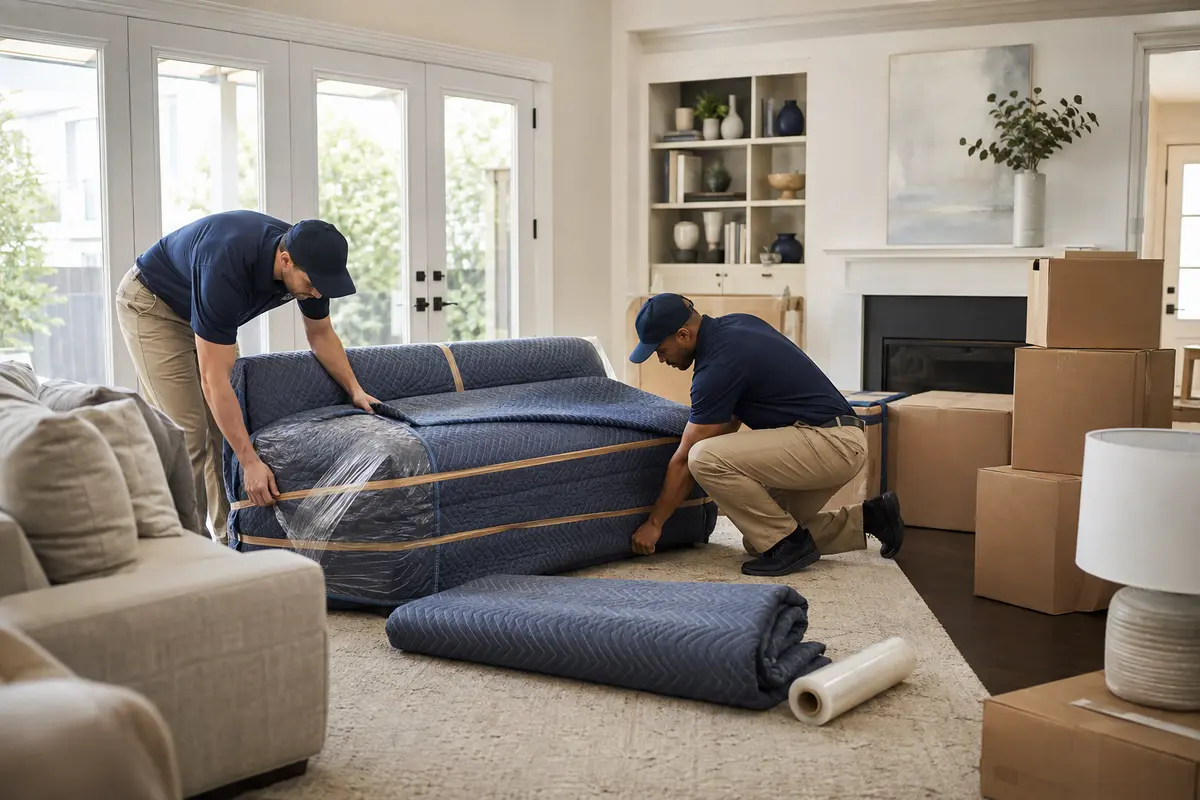
- Furniture wrapping
- Floor and doorway protection
- Disassembly and reassembly
- Fragile-item handling
- Room-by-room placement
Choose the amount of packing help you need
Full-service packing is useful when time is limited or an entire household must be prepared. Partial packing focuses the crew on kitchens, artwork, closets or other areas that need extra care.
If you prefer to pack yourself, ask about appropriate cartons and protective materials. Consistent box sizes and clear labels improve loading efficiency.
- Full household packing
- Partial-room packing
- Wardrobe cartons
- Dish and glass protection
- Unpacking assistance
What happens on moving day
The crew confirms the scope, walks through the property and prepares the loading path. Items are protected and loaded according to weight, size and delivery order.
At destination, the crew follows your room labels, places furniture and reassembles agreed pieces. A final walkthrough helps confirm that the truck and property have been checked.